What gear you need to climb the highest mountain in Africa
The Kilimanjaro Packing List for a Successful Climb
Kilimanjaro is often called the easiest of the “Seven Summits,” but don’t underestimate it. What you pack has a big effect on whether you reach the top. Many lists online tell you what to bring but not why. Our Kilimanjaro packing list explains both, whether this is your first big climb or you have done plenty. Below you will find the gear, plus the practical tips we have picked up, so you are ready for every part of the climb.
Recommended Kilimanjaro Gear
Baggage and Sleeping Kit
- Large holdall, 70-90 litres capacity (for kit carried by porter)
- Day sack, 25-45 litres (for personal use on mountain; ready-access items)
- Sleeping bag (-10°C / 14°F “comfort” rating, or colder)
- Waterproof rucksack liner or heavy duty plastic sack
- Elasticated waterproof rucksack cover – not essential, but a good idea
- NB: you don’t need to bring sleeping mattresses, as we provide them – except on the Lite and Superlite Series, where we recommend a Thermarest
Clothing for Climbing Kilimanjaro
- Sweat-wicking T-shirts / vests
- Fleece (Polartec 300 grading or similar)
- Insulated down jacket or similar
- Down mittens or similar
- Lightweight gloves for non-summit days
- Thermal Long-Johns or compression tights for summit night
- Lightweight walking trousers (skip jeans and heavy cotton: they chafe and dry slowly)
- Underwear (lycra shorts and / or briefs are usually better than boxer shorts which gather and chafe)
- Good quality hiking socks and thin liner socks. (Buy socks at least a size too small; otherwise they stretch, bunch up and cause blisters)
- Breathable lightweight waterproofs (jacket and trousers).
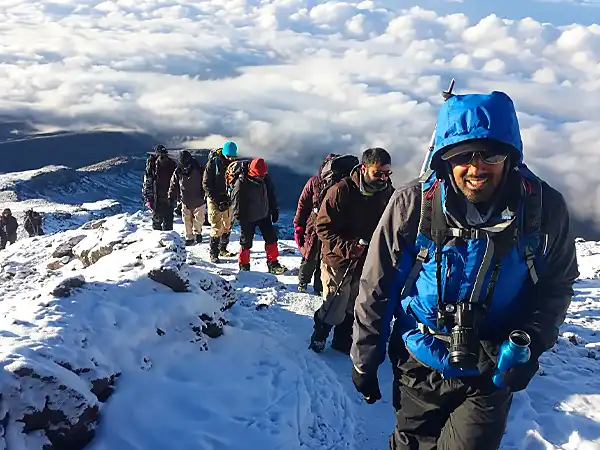
- Waterproof walking boots, sturdy and worn-in. A Gore-Tex membrane or similar is a good idea. You don’t need Alpine or C3 boots for Kilimanjaro, but your boots must have good ankle and arch support and a good deep tread pattern.
- Calf gaiters
- Balaclava
- Goretex Mountain Cap or Woollen Hat
- Wide brimmed sun hat to protect face, ears and neck
Hygiene Related Kilimanjaro Packing List
- Toothbrush & toothpaste
- Lightweight travel towel
- Deodorant
- Flat packed Wet Ones, travel wipes, or similar, for personal hygiene on the mountain.
- Kleenex tissues in plastic travel pouches or toilet paper
- Hairbrush / comb
- Sanitary products
- Lip salve with UV protection
- Vaseline, to prevent chafing skin and heel friction blisters
Health Related Items Must Have on Kilimanjaro Packing list
- Malaria tablets (if you decide to take them. Most people ask their GP first. Some anti-malarial courses need to start several weeks before you leave)
- Factor 30+ sun cream
- Sun barrier cream white / blue for nose and ears
Documents Needed When Travelling to Kilimanjaro
- Passport (valid for at least 6 months after the date you plan to return)
- Tanzanian entry visa. (If you fly to Nairobi and take the bus to Arusha, you can buy a Kenyan visa on arrival at Nairobi airport.)
- Flight tickets
- Cash in US dollars (for tips and things you buy locally, such as taxis and meals). Notes should be newer than 2009, as local banks do not accept older notes
- Credit card (for emergencies only)
- Travel insurance documents (optional)
- Vaccination certificates (Yellow Fever, if visiting a ‘risk zone’ prior to entering Tanzania)
We don’t recommend traveller’s cheques, as the exchange rates for them in Arusha are very poor.
Other Things Recommended Kilimanjaro Gear List
- Powerbank to recharge your phone – a solar-charging one with built-in multi-cables works best
- Rechargeable hand warmers and foot warming insoles for summit night only
- Sunglasses with UV-filter lenses
- High energy snacks (cereal bars, dried fruit & nuts), & energy gels for summit night
- Contact lens wearers: Spare contact lenses and fluid, if worn
- Watch – ideally with heart rate and GPS, so you can look back at your route afterwards
- Head torch with spare batteries for summit night & tent admin
- Water bottles & Camelbak. Your total water carrying capacity should be 3 litres
- Ear plugs and blindfold (to help you sleep on the afternoon before summit night)
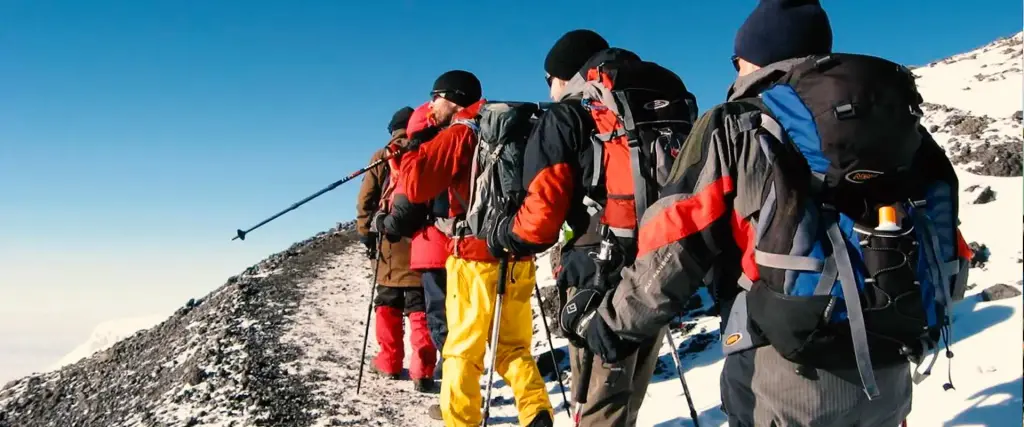
- Optional: Telescopic walking poles – around 80% of our climbers use them
- Mobile phone. You get a signal on most parts of the mountain. Before you travel, ask your provider to remove any network lock, so you can use a local SIM card.
Personal Small First Aid Kit to be Carried by Each Climber on Kilimanjaro
- Pain killers (Ibuprofen)
- Diamox (Acetazolamide) – if you choose to use it. We can supply it.
- Paracetamol
- Zinc oxide tape and small scissors.
- Compeed blister pads
- Loperamide diahorrea tablets
- Any medication you normally use
- Loperamide Dioralyte sachets or similar rehydration packs.
Your guide carries a bigger medical kit with extra Acetazolamide, Ibuprofen, anti-inflammatory gel, bandages, Loperamide, Amoxycilin, oral Dexamethasone and several other items.
Supplementary Kilimanjaro Packing List for Western Breach Climbers
Not every climber thinks these items are needed. In fact, many of our own staff and leaders often use none of them, unless they know conditions are especially bad at the time.
We list them for climbers who prefer to play it safe against the known seasonal risks on the Western Breach. These include rock-fall, ice under the surface (meltwater runs off, freezes again and makes it hard to get a grip), and now and then deep snow that piles up in some gullies.
- Articulated 12 / 14 point crampons (particularly if climbing during the wet season)
- Anti-balling plates (silicon slabs usually supplied with crampons; prevent snow sticking)
- Ice-axe – a fairly straight, long one is best, though your guide will cut steps for you
- Helmet (rock-fall should be considered a risk throughout the year)
- Climbing rope with a diameter of 9 millimetres (a 30 metre length is enough for 4 climbers) – A rope is not really necessary, but some groups who are used to moving together in the hills like to have one
- Basic climbing harness – only worth bringing if you already own one and like to use it. The risk of a serious fall is very low on the new Western Breach route, and when our own staff use a rope, they usually tie on without a harness.
Kilimanjaro Climbing FAQ’s
Here are answers to the questions we hear most often about the Kilimanjaro Climb:
How high is Mount Kilimanjaro?
Mount Kilimanjaro is 5,895 meters (19,341 feet) above sea level. That makes it the highest peak in Africa.
What is the best time to climb Kilimanjaro?
The best times are the two dry seasons, from January to March and from June to October. In these months the skies are usually clearer and the weather is more settled.
How long does it take to climb Kilimanjaro?
It depends on the route, but most treks take 5 to 9 days. More days give your body more time to acclimatize, and that improves your chances of reaching the summit.
Do I need to be an experienced climber to climb Kilimanjaro?
No, you don’t need any climbing experience. You do need to be fit and mentally ready. Many climbers reach the summit with good training and the help of experienced guides.
What is altitude sickness, and how can I prevent it?
Altitude sickness, or acute mountain sickness (AMS), happens when your body cannot adjust to the lower oxygen levels high up. To prevent it, climb slowly so you acclimatize, drink plenty of water, and think about altitude sickness medication if a doctor or other healthcare professional recommends it.
What gear do I need to climb Kilimanjaro?
The basics are sturdy hiking boots, warm layers, a sleeping bag rated for the cold, a headlamp, trekking poles and a backpack. You also need proper high-altitude gear such as insulated jackets and gloves. See the full list above.
Which route should I take to climb Kilimanjaro?
There are several routes, and each one is different in feel and in difficulty. Popular choices are the Machame Route, Marangu Route, Lemosho Route and Rongai Route. The right one for you depends on your fitness, your budget, and how much you care about scenery and quiet trails.
Do I need a guide to climb Kilimanjaro?
What accommodation options are available during the climb?
On most routes you sleep in tents at campsites along the way. Some routes, like the Marangu Route, have basic mountain huts with bunk beds. If you want more comfort, some routes offer luxury options such as premium tented camps.
Is it safe to climb Kilimanjaro?
Yes, generally, if you take sensible precautions: choose a reputable tour operator, give yourself time to acclimatize, and follow the safety rules. Still, be aware of the risks of trekking at high altitude, such as altitude sickness and bad weather.