Best Route To Climb Kilimanjaro
Which is the best route to climb Kilimanjaro? Compare the routes by length, scenery and success rate to choose the right one for your climb.
Kilimanjaro climb
Mount Kilimanjaro offers six established routes for climbers: Marangu, Machame, Lemosho, Shira, Rongai, and Umbwe. Marangu, Machame and Umbwe start on the south side. Lemosho and Shira come in from the west. Rongai starts in the north, close to Kenya. Every route except Marangu and Rongai comes down through Mweka.
The 7 Days Rongai Route: quiet trails and gentle slopes
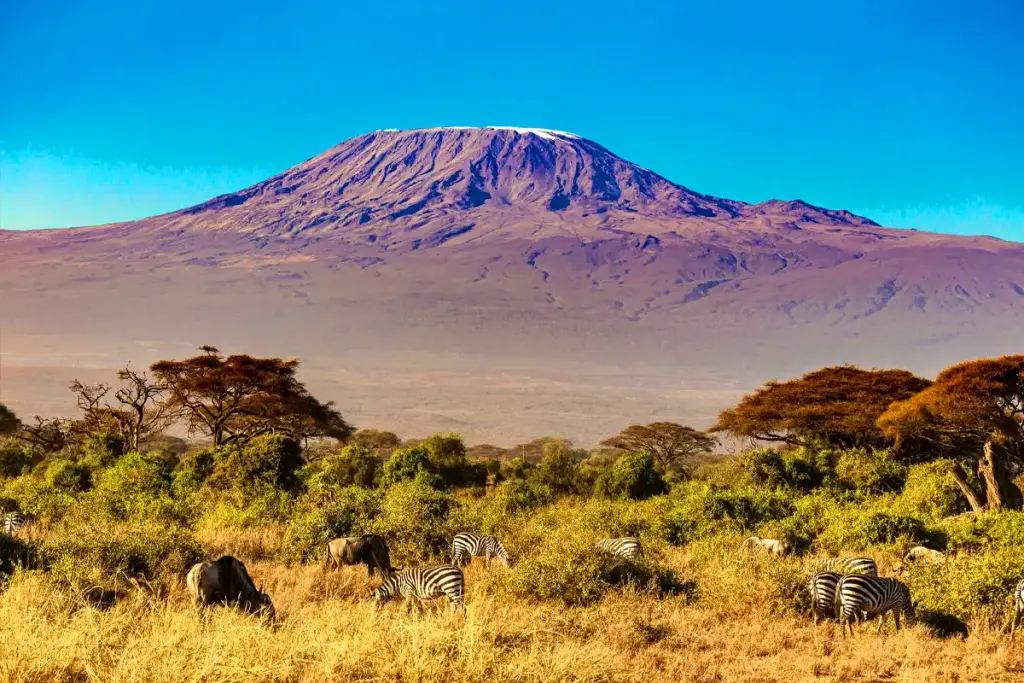
Rongai is far from the busy southern trails, so it is one of the quietest ways up the mountain. It feels wild, and you may see large animals such as antelope, elephants and buffalo. It is on the drier side of Kilimanjaro, so you usually get less rain and clearer views of the peak.
The Rongai Route is fairly flat, but it does not follow the ‘climb high, sleep low’ pattern, so it needs extra days to acclimatize. Even so, many people see it as one of the easier routes up Kilimanjaro. It is the only route that starts in the north and comes down the Marangu Route. Summit night from Kibo Hut is steep and follows the same path as the Marangu Route, past Gilman’s Point to Uhuru Peak.
The trail works its way round the mountain before you go up from the east for the summit bid.
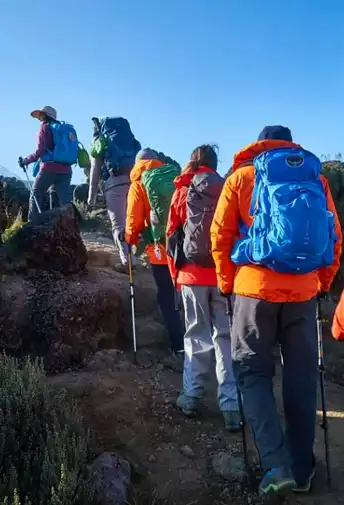
From Moshi it is a 4-5 hour drive past coffee farms and through Nale Muru village to the Kilimanjaro National Park Gate. While we wait for the permits, you can watch the other crews getting their loads ready. Then you set off on winding paths through the woods, and your guide tells you about the plants and the animals you are likely to see. Simba camp is near the first cave, at the edge of the moorland, with wide views over the plains of Kenya.
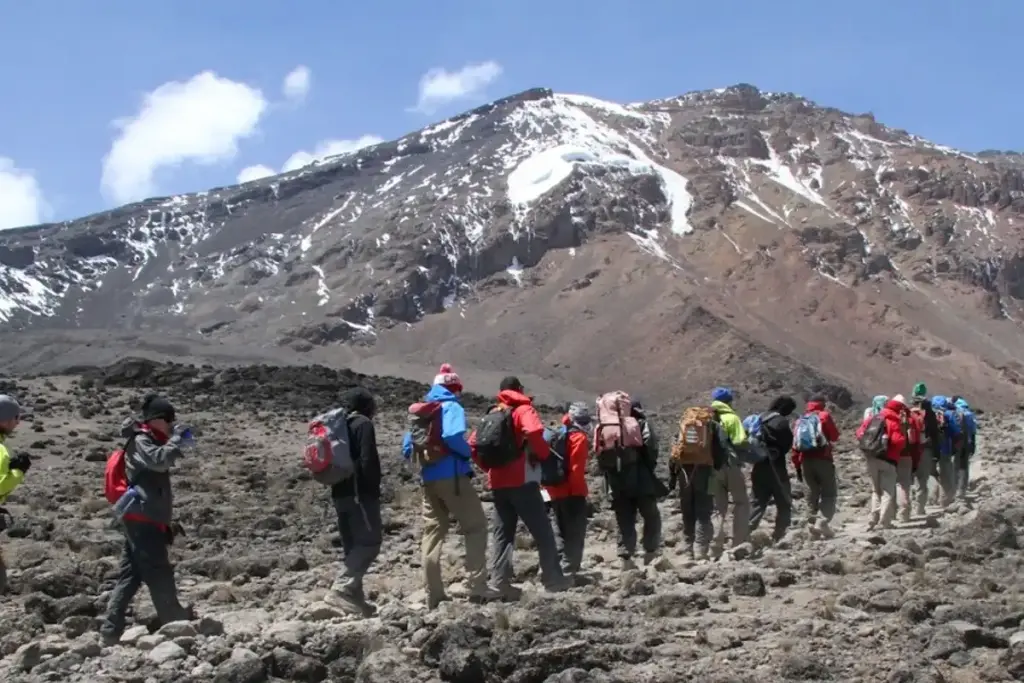
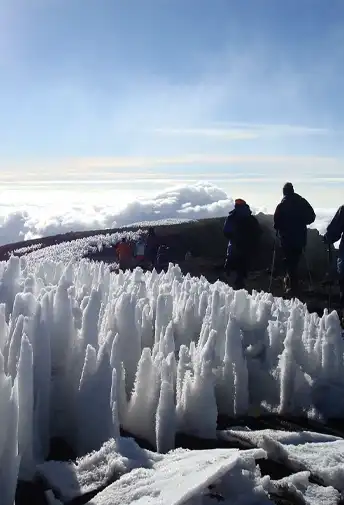
After a good night’s sleep and a big breakfast, we follow a steady uphill path across the moorland. You get great views of Kibo and your first look at the ice fields on the eastern crater rim. The small moorland shrubs thin out as you get close to the Second Cave. It starts to get colder.
After breakfast and packing, you keep climbing steadily into semi-desert. It is a fairly short day, and the eastern ice fields get closer with every hour. Listen to your body, and tell your guide about any signs of altitude sickness.
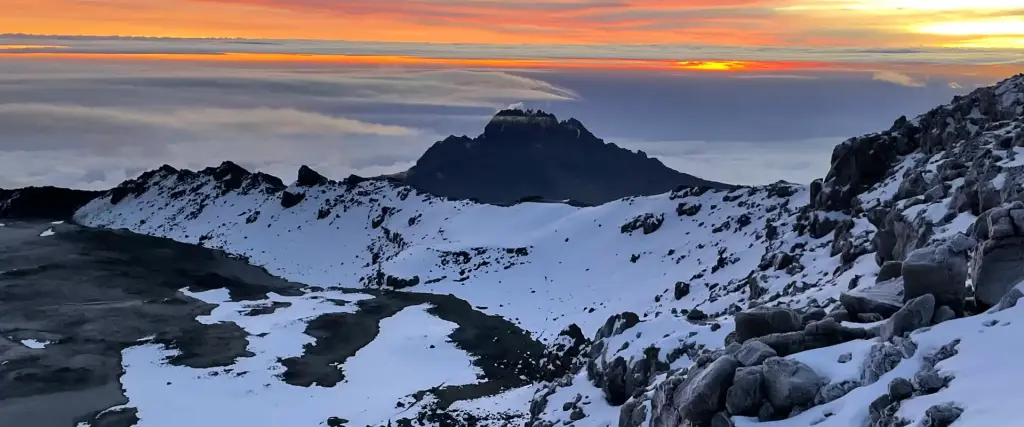
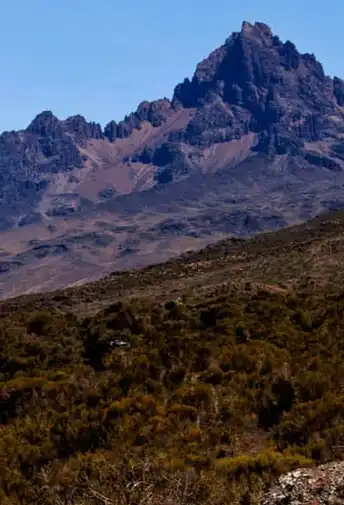
A short, steep climb up grassy slopes leads to very good views. The plants run out just before the next camp at Mawenzi Tarn. The camp sits in a rocky bowl right below the tall, jagged peaks of Mawenzi. The afternoon is free to rest or walk around nearby, which helps you acclimatize.
If you add an extra day on the mountain, you camp here for two nights. You can then walk up and around Mawenzi as your acclimatization hike.
Today you cross the bare, moon-like desert of the ‘Saddle’ between Mawenzi and Kibo. Kibo campsite is at the bottom of the Kibo crater wall. You spend the rest of the day resting before the final climb on Summit Night.
Elevation: 4714m/15,466ft to 5895m/19,341ft
Altitude gained: 1181m
Descent to 3721m/12,208ft
Altitude lost: 2174m
The alarm goes off early: you start walking between midnight and 2 a.m. This is the toughest part of the trek, physically and mentally.
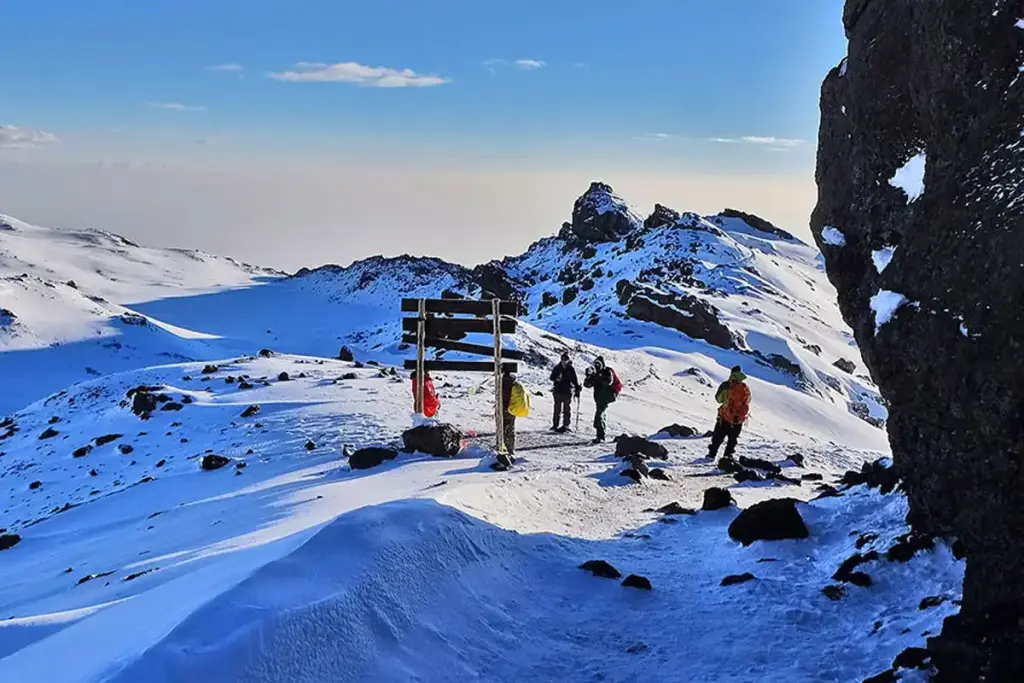
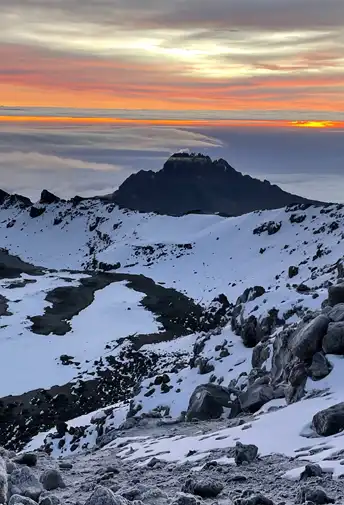
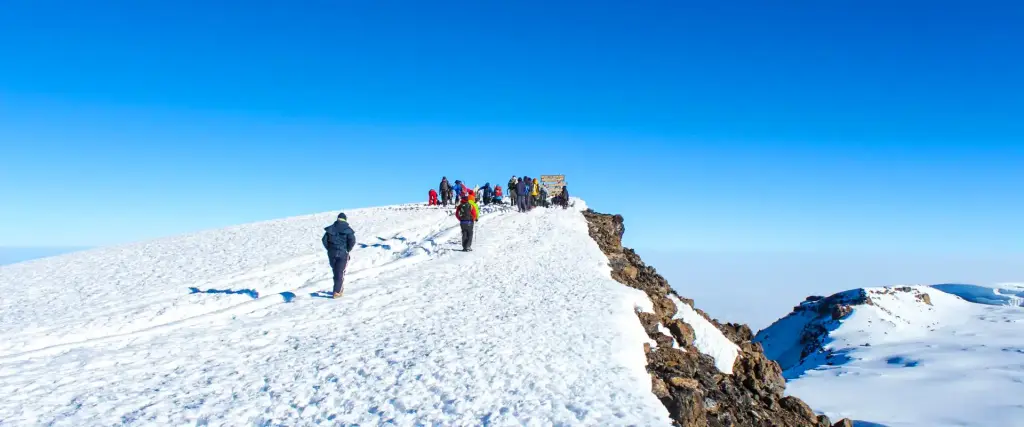
The path climbs the steep slope above Kibo Hut. Stay warm, take it slowly and keep your mind on the top. We zigzag up through deep scree to Gilman’s Point on the crater rim. With luck, you get a beautiful sunrise during the short rest here. Faster walkers may see it from the summit. From here it is about 1 hour more to Uhuru Peak, and you will probably walk on snow the whole way.
Well done. One step at a time, you have reached Uhuru Peak, the highest point on Mount Kilimanjaro and in all of Africa.
After photos, hugs and maybe a few happy tears, we take a few minutes to enjoy what you have done. Then we start the steep descent back to Kibo Hut for lunch and a very short rest, and carry on down to Horombo Huts. The ground is loose gravel and volcanic ash, so we strongly recommend gaiters and trekking poles. In the evening you can finally rest and enjoy your last night on the mountain. Overnight Horombo Huts.
After breakfast your crew says thank you and goodbye with a short ceremony, often with songs. We keep heading down and stop at the Mandara Huts for lunch. You part ways with your guides, cooks and porters here, so remember to tip them. At the Marangu Park Gate you collect your summit certificates. It is much warmer down here, and the path is wet, muddy and steep, so we strongly recommend gaiters and trekking poles. A vehicle meets you at the gate and takes you back to your hotel in Moshi (about 45 minutes). Then enjoy a long hot shower, a good dinner and a celebration.
We've put together what you need to know before your Kilimanjaro climb. Our free guide is full of practical hints, tips and advice from the trail.
Which is the best route to climb Kilimanjaro? Compare the routes by length, scenery and success rate to choose the right one for your climb.
How to prepare to climb Kilimanjaro: when to go, which route, training, altitude, hydration and the gear to pack, in one practical guide.
Mount Kilimanjaro facts before you climb: geography and altitude, climate zones, climbing routes and the records set on Africa's highest peak.
Kilimanjaro success rates route by route, the factors behind them, and how to raise your own chances of reaching the summit.
Route guide
The Rongai Route climbs Kilimanjaro from the drier north, away from the crowds. What to expect on the route, and our Rongai climbs.
Also on this route: 6 Days Rongai Route
You might also like
Tripadvisor reviews
Excellent Trip of a Lifetime
Our family had the trip of a lifetime over the holidays. Our guides were amazing and always checked to make sure that we had everything we needed. In less than 2 weeks we got to do a short safari in Ngorongoro Crater, did a family visit as part of the cultural experience (my kids are still talking about how good the food was!!), visited Moshi for shopping, went to Dar Es Salaam and did a 2 day trip to Zanzibar. The logistics were all very smooth and the guides added humor and levity to the entire trip. We were in good hands and will never forget the hospitality shown to us while there. The best thing about the packages is that you can work with the team to tailor it to your exact timeline. We had to get back to work and school so opted for a short Christmas trip but we'll eventually go back to do a longer summer trip. Forever indebted for such a great experience!
Trip of a life time!! But why not go back?
BEST VACATION!!!! Eye opening, amazing, Beautiful and REAL. The safari was my favorite part. Seeing animals you learn about and dream of seeing right in front of your face. The food was great I ask you to be open and not get your norm. Safe? Yes. Of course there’s times you question a new country, area and people. There was never a moment I was in question of people or my surroundings. Next time I’m bring my kids they’re older and can help pay… hahaha. I heard it’s best not to go during the rainy Season it’s just easier and more enjoyable to get around. Just what people have said.
Great experience
Had a wonderful Safari experience in Nothern Tanzania. Got to see some Lions very closely. Best experience in a very long time tbh.
It was an amazing experience!
Awesome experience! Beautiful and exciting destination full of nature! We went during fall but anytime of the year is recommended. Planning for my next trip there!