Best Time To Visit Tanzania
Tanzania is in East Africa, close to the equator, so the Best Time To Visit Tanzania is almost any time of year. Still, some months suit some trips better than others. To help you pick the right time for your Tanzania Safari Tours, this guide covers the climate, the seasons and the weather. We also list good things to do whether you come in summer or winter, and we look at temperature and rainfall in some detail.
Tanzania Seasons – High & Low
In short: Tanzania has a busy high season and a quieter low season. Here is how they work.
The country has two main seasons. The High season, or dry season, runs from mid-June to mid-October. The Low season, or wet rainy season, runs from January to February and again from November to December.
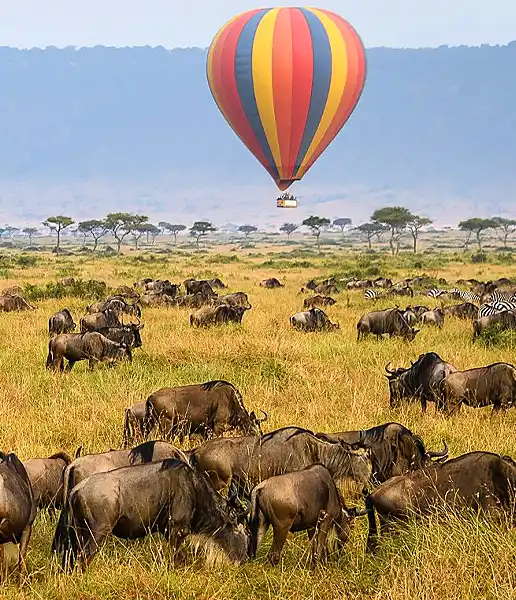
The Best Time For Safari In Tanzania is the high season. The weather is pleasant and the animals are easier to see. In the Serengeti, look out for the big wildebeest herds on the move in June and July. Many people consider these the Best Month For Tanzania Safari. February is a very good time to see wildebeest calving.
| High or Peak Season | Low or Green Season |
| About June to October (long dry season) | About January to March and November to December |
| Highest rates | Lowest rates |
| Need to book well in advance | No need to book too far in advance |
| Cool and dry weather | Hot and occasionally wet weather |
| Not many baby animals around | Lots of baby animals around |
| Most crowded | Least crowded |
| Good photography conditions | Greenest, most scenic landscapes with the best light of the year for photography |
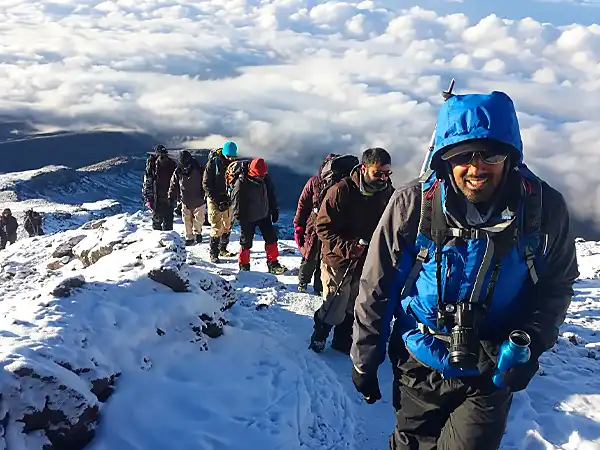
The High season is a good time for a Zanzibar Beach Holiday, short day trips or a climb on Kilimanjaro. The mountain is much harder in the wet season, so the dry months are the better time to climb. Overall, most people see the high season as the Best Season To Visit Tanzania.
When To See The Wildebeest Migration In The Serengeti
Why Do Thousands Of Travellers Come To The Serengeti? For The Great Wildebeest Migration
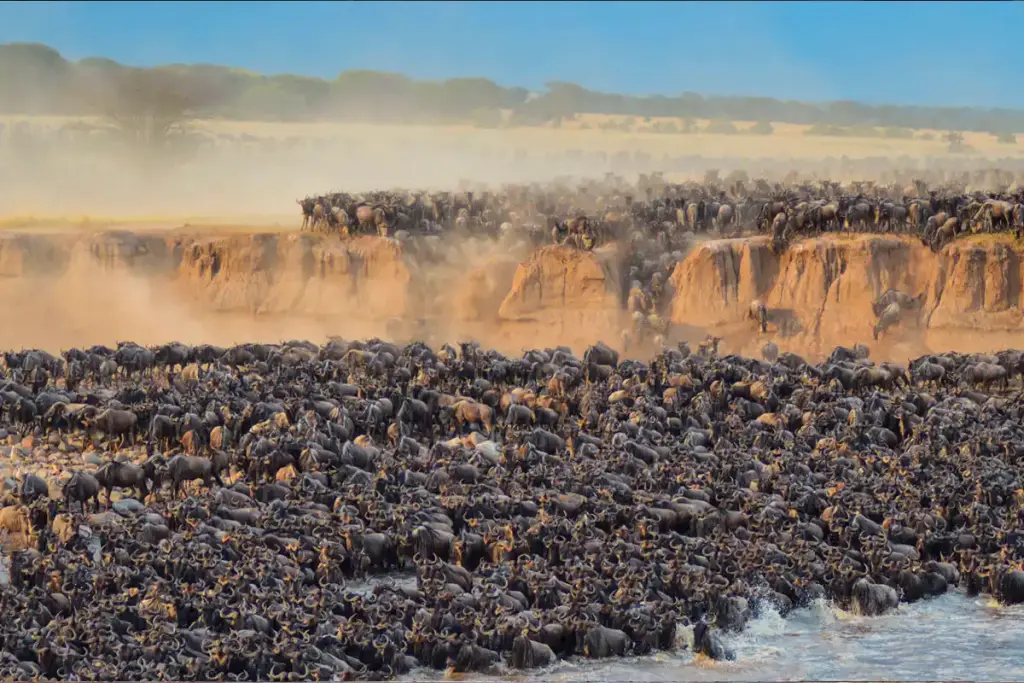
The Great Migration is one of the main reasons people visit Tanzania, and it moves around the Serengeti all year. Travellers from all over the world come in large numbers between July and September to see the biggest yearly movement of mammals in Africa.
At that time you can watch huge herds of wildebeest and zebra crossing the Mara River, trying to get past the crocodiles and other predators waiting for them. The other big moment is January and February, when the herds gather in the southern Serengeti and the wildebeest give birth to their calves.
Which Time To Avoid Visiting In Tanzania? – April And May, When Heavy Rains Can Spoil Wildlife Viewing
June-July-August-September is the best time for general wildlife viewing. July to March is the busiest time in the national parks.
March and April bring heavy rainfall, so the weather is not great, and you will see far fewer visitors.
| Event | Approximate Time |
| Calving or Birthing Season | January to March |
| Intense Big Cat Action | January to March |
| Rutting (a period of sexual excitement, reproductive activity and mating battles between males) | January to March |
| Grumeti River Crossings | May to July |
| Mara River Crossings | July to September |
The Best Time To Visit Tanzania depends a lot on which animals you want to see. The rains shape the seasons and where the wildlife is, so your trip will feel a little different depending on when you come.
The ‘green season’ in Tanzania runs from November to March, and the parks are much quieter. Some people call this the Best Time Of Year To Travel To Tanzania. You may get rain showers, but it is a great time for bird watching, because thousands of migratory birds arrive.
For most visitors, the best time to visit Tanzania is from July to October, when the country is at its driest. This is when the migration river crossings happen. It is also good in every park, because the grass and bush are thin and animals are easier to spot.
Tanzania Climate – Region by Region
Tanzania lies just south of the equator and has a tropical climate. In most of the country the temperature rarely drops below 20°C. The highlands are the exception.
November to February is the hot season, and May to August are the colder months.
Outside the winter months, it is always the rainy season somewhere in Tanzania. The north and northeast get most of their rain from December to April, while the rest of the country gets rain between October and December and again from March to May.
Month By Month Climate Guide Tanzania:
What is it like to visit Tanzania in January?
It is getting warmer, the humidity is building and there is a chance of rain. Rates are lower and the game viewing is excellent, so January is still a great month for your Tanzania Safari Tours. At this time of year the migration herds are in the southeast of the Serengeti for the calving season.
Another reason to come in January: it is Tanzania’s Green Season, and bird watching is superb, with thousands of migratory birds arriving.
What is it like to visit Tanzania in February?
The herds are still around Ndutu in February. The weather is hot and humid, with a chance of rain.
What is it like to visit Tanzania in March?
In March the migrating herds start to leave Ndutu and head west towards the Grumeti River. It is Low season, just before the heavy rains, so you can get good prices.
What is it like to visit Tanzania from April – May?
We suggest you avoid these months. This is when the heaviest rain falls in Tanzania.
What is it like to visit Tanzania in June?
The green season leaves the grass and bush thick and green, which makes June a lovely time to travel, especially for bird watchers. The parks are full of migratory birds, above all in the south, and the migration is still in the Grumeti area.
What is it like to visit Tanzania in July?
July starts the peak season, and July to October is a busy time in Tanzania. In the north of the Serengeti, the Great Migration starts moving towards Kenya, and elephants begin to gather in Tarangire. As the land dries and the days warm up, game viewing gets easier and more fun. Temperatures run from the high 20°Cs to the early 30°Cs, and humidity is low.
Why come between July – October? To watch the Great Migration river crossings, when herds of animals in their hundreds cross Tanzania’s rivers on their long trek.
What is it like to visit Tanzania in August?
August is also Peak season in Tanzania. The Migration is still in the north. The land gets drier, so animals gather in more predictable places. In Ruaha, game spotting gets much easier as the thick bush dries out.
What is it like to visit Tanzania in September?
September is still Peak season. It is the end of the migration in the north, with herds on both sides of the Kenya and Tanzania border, and there are lots of elephants in Tarangire.
What is it like to visit Tanzania in October?
The migration has moved into Kenya, but October is still peak season, because game viewing in the central Serengeti is still very good.
What is it like to visit Tanzania in November?
November brings the start of the short rains. It is low season, so rates are lower, but it is still a popular time to travel. Rain is possible during the day as well. The migrating herds start moving south from Kenya, so you can see crossings in the north of the Serengeti.
What is it like to visit Tanzania in December?
Short rains are possible, usually at night. Temperatures and humidity rise. It is a good month for a Tanzania Safari, because the herds in the north start travelling south to Ndutu. It is also the festive season, so it gets very busy.
Winter Activities In Tanzania
In the winter months, average rainfall in Tanzania is about 95 mm. Expect higher humidity at this time.
See the wildebeest calving
Summer in northern Tanzania is dry and hot. This is the time to see the wildebeest calving in Serengeti National Park. By now the herds have come south from Maasai Mara National Park in Kenya as part of their yearly cycle. Around 10,000 calves can be born in the park at any one time.
Sauti za Busara Music festival
The Sauti za Busara festival in Zanzibar is one of the biggest music festivals in Africa. The name means “sounds of wisdom” in Swahili. It runs for four days, once a year. Artists come from all over the continent to share pan-African music with the rest of the world.
Run a Marathon
A marathon is held in the Kilimanjaro foothills every March. The Tanzanian Government supports it as a way to promote sport and athletics. Runners come from around the world each year. The first ten finishers win a cash prize and a medal.
Feast on spicy meat at the barbecue festival
Family recipes are a big part of African culture and tradition. The Nyama Choma barbecue festival celebrates good food and those family recipes. Grilled meat, a major part of African cooking, is prepared with plenty of spice and fire. The food is the main reason travellers go, and it is very good.
Wander the House of Wonders
Visit the House of Wonders, an old building that was the first in Tanzania to get electricity and luxuries such as a lift. Its architecture mixes British, Persian, Portuguese and Zanzibari styles. Many visitors stop here in the winter months.
Summer Activities In Tanzania
In the afternoon, temperatures in Tanzania range from 20°C/68°F to 30°C/86°F, depending on altitude and location. Many people find this the Best Time To Visit Tanzania, because you can do all of the following:
Visit the Ngorongoro Crater
The Ngorongoro Crater is on UNESCO’s World Heritage Site list. It was once a huge volcano that erupted 3 million years ago. Today it is one of the largest inactive calderas on Earth, with beautiful scenery and plenty of wildlife, such as black rhinos, elephants, hyenas, leopards and the big black-maned lions.
Get close to nature at Serengeti National Park
Serengeti is one of the most beautiful national parks in Africa. It is so well known that people sometimes use Best Safari In Tanzania and Serengeti to mean the same thing. It has some of the best wildlife and views all year round, but the Best Time To Visit Tanzania, and the Serengeti in particular, is the Tanzanian summer.
Spend your time on the turquoise beaches of Zanzibar
Good news if you like water sports. When it gets hot in Tanzania, you can cool off on the Zanzibar islands. The clear blue and turquoise water is great for family days out and long hours on the beach.
Climb Mount Kilimanjaro
Kilimanjaro suits anyone who loves a challenge, as well as experienced mountain climbers. The mountain rises to 19,341 feet, and about 75,000 people come to climb it every year. Reaching the top is a big achievement.
Serengeti is famous for “The Great Migration”, when over 2 million grazing animals follow the rain to find fresh grass. You can see wildebeest, zebras, eland and gazelles across the savannah. It is a wonderful sight. The Best Time To See Serengeti Migration is from July to September.
Frequently Asked Questions About Winter In Tanzania
Still have questions about the Best Time to Visit Tanzania? We are happy to help.
- Does it snow in Tanzania in winter?
- Yes, but only on the mountain summits during the Tanzanian winter.
- When is winter in Tanzania?
- Strictly speaking, there isn’t one. Tanzania is close to the equator, so it has only two seasons (rainy and dry seasons), not the four calendar seasons you get elsewhere in the world.
- What is the rainfall pattern in Tanzania like?
- It changes from region to region. High humidity shapes the rains in the North and east, which get two rainfall seasons (Nov-Dec and March-May). The Southern region has one long rainy season (December to May). You may also get early morning showers, usually followed by a very sunny afternoon.
The weather is good and the travel season is here. If you are thinking about a holiday in Tanzania, now is a good time to start planning.
Use our Safari Packing List Tanzania so you bring the right things and don’t forget anything. With us, your Tanzania Safari Cost stays affordable, and the trip is still comfortable. On safari we serve Tanzania Food that is tasty and authentic. And apply for your Tanzania Visa early to avoid last-minute stress.
Tanzania Safari Guide FAQ’s
Here are answers to some common questions about Tanzania safaris:
When is the best time to go on a Tanzania safari?
It depends on what you want from your Tanzania safari. The dry season (June to October) is best for wildlife viewing, because animals gather around water. The wet season (November to May) brings green landscapes and fewer crowds, but heavy rain can close off some areas.
What wildlife can I expect to see in Tanzania?
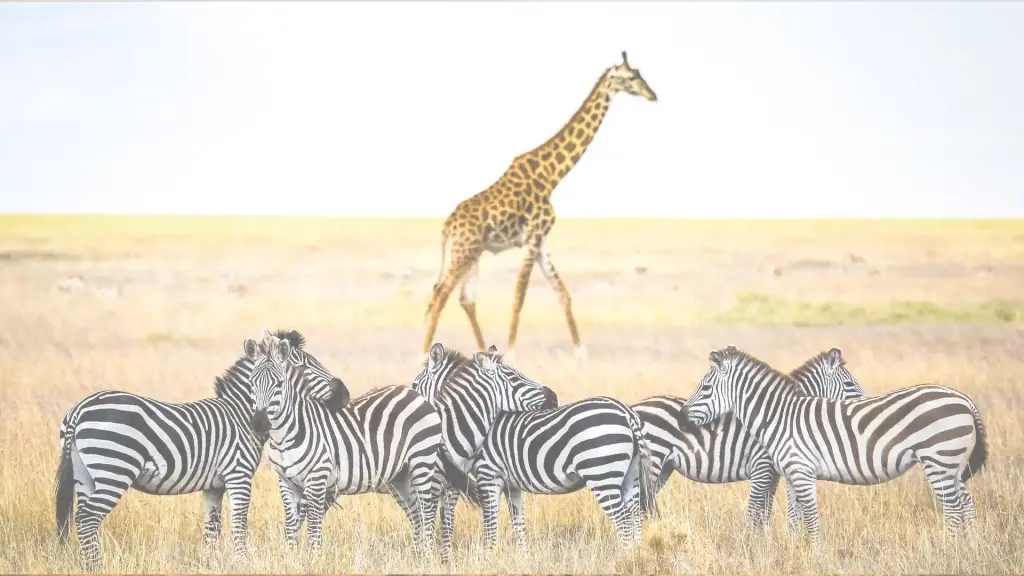
A lot. Tanzania has the Big Five (lion, elephant, buffalo, leopard and rhinoceros), plus giraffes, zebras, wildebeest, cheetahs, hippos, crocodiles and many kinds of birds.
What are the main national parks and reserves in Tanzania?
The best known are Serengeti National Park, the Ngorongoro Conservation Area, Tarangire National Park, Lake Manyara National Park and Selous Game Reserve.
Do I need a visa to visit Tanzania?
Most visitors do. You can get a visa on arrival at the airport, or apply online before you travel. The rules depend on your nationality, so check with the Tanzanian embassy or consulate in your country first.
What type of accommodations are available on a Tanzania safari?
You can choose anything from luxury lodges and tented camps to budget campsites. Each feels different, and the facilities go from basic to very luxurious.
Is it safe to go on a Tanzania safari?
Yes, Tanzania is generally safe for travelers, including on safari. Still, take sensible care: listen to your guide, keep up with local news and keep your belongings secure.
What should I pack for a Tanzania safari?
Pack light clothes that breathe, strong walking shoes, a hat, sunglasses, sunscreen and insect repellent. Bring a camera with spare batteries and memory cards, and any medicines you need.
What kind of vehicles are used for safari game drives?
Most safari companies in Tanzania use tough four-wheel-drive vehicles, such as Land Rovers or Land Cruisers, with pop-up roofs so you can stand and watch wildlife. They are roomy and comfortable, and built for the rough roads in the national parks and reserves.
Are there any cultural experiences available on a Tanzania safari?
How can I book a Tanzania safari?
Send us a message through the Contact Form, or reach us by email or phone, and we will help you book your Tanzania safari.